
By a countertop and remodeling industry contributor. You’ve spent weeks visiting showrooms and finally found it: the perfect slab of quartz with delicate, river-like veining. You run your hand over the polished surface, picturing it in your kitchen. The hardest part is over, right? Now it’s just a matter of getting it delivered and installed.
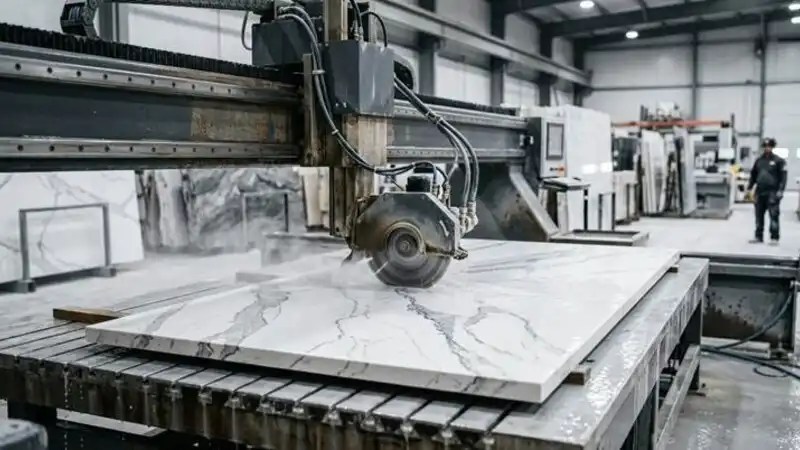
This is where many remodeling timelines go off the rails. That raw, rectangular slab is not a finished product. It’s the raw material for one. Turning it into the functional centerpiece of your kitchen requires a precise manufacturing process called fabrication. This is the specialized work performed by dedicated shops, and finding the right team is crucial. While many general contractors subcontract this out, dedicated countertop fabricators arvada and in other areas manage the entire process, from digital measurement to final sealing. Understanding this stage is the key to setting a realistic budget and schedule.
Quick answer: Countertop fabrication is the custom manufacturing process that turns a raw stone or quartz slab into your finished kitchen or bath surface. It involves precise digital templating, cutting with specialized saws, finishing edges, and creating cutouts for sinks and cooktops. The full process, from template to installation, typically takes 7 to 15 business days, not including the time to select your material.
What’s inside
- Why Does the Fabrication Process Matter So Much?
- What Questions Should I Ask a Countertop Fabricator?
- What Makes a “Good” Seam in Quartz or Granite?
- Frequently Asked Questions
- Beyond the Slab: Why Fabrication Defines Your Countertop
Why Does the Fabrication Process Matter So Much?
The quality of fabrication directly determines the final fit, finish, and durability of your countertops, and a single mistake can ruin an expensive slab of material. It is the critical bridge between your design vision and the finished reality. While selecting the stone feels like the main event, its transformation from raw material to a functional surface is where the real craftsmanship lies. Poor fabrication can lead to visible seams, uneven surfaces, and gaps against your walls or cabinets.
The process is unforgiving. Natural stone and quartz slabs are costly, and there is no “undo” button on a bad cut. A fabricator’s first job is to analyze the slab, identifying its best features and any potential flaws like fissures. They then use sophisticated software to lay out your kitchen’s templates onto a digital image of the slab. This step allows them to plan where seams will fall and how the stone’s natural veining will flow across different pieces, a technique especially important for creating a “bookmatched” look on an island, where two slabs mirror each other.
❝ Before any cuts are made, ask to see the physical or digital layout of your templates on the actual slab. This is your last chance to approve how the veins will flow across a seam or where a unique mineral deposit will land on your island. It confirms you and the fabricator share the same vision for the finished product.
Once the layout is approved, the slab is moved to a CNC (Computer Numerical Control) saw or a waterjet cutter. These machines follow the digital template with extreme precision, far beyond what is possible by hand. They make the primary cuts and create the openings for your sink, cooktop, and faucets. The final stage involves finishing the edges to your chosen profile, whether it’s a simple eased edge or a more decorative ogee. This requires multiple rounds of polishing with progressively finer abrasives to achieve a smooth, consistent finish that matches the top surface. Any shortcuts here will be immediately visible and tangible.
What Questions Should I Ask a Countertop Fabricator?
You can evaluate a fabricator by asking detailed questions about their equipment, processes, and how they handle material-specific challenges like seams and internal corners. A professional shop will be transparent about their methods and technology, as these are direct indicators of the quality of the final product. The goal is to understand their standard of work before your expensive slab is even touched.
Start by asking about their templating and cutting technology. Do they create a digital template of your cabinets using a laser or a physical probe system? This method is far more accurate than building a physical template from wood or cardboard strips, ensuring a tighter fit against uneven walls. Then, ask what equipment they use for cutting. For hard materials like quartz and granite, a shop should be using a CNC (Computer Numerical Control) saw or a waterjet cutter. These tools follow the digital template precisely, producing clean lines and accurate cutouts that are nearly impossible to achieve with hand tools.
Next, focus on the details of finishing and installation. A crucial question is how they handle inside corners, such as in an L-shaped kitchen. A sharp 90-degree corner creates a stress point that can lead to cracks over time. A quality fabricator will always cut a slight radius on inside corners to distribute this stress. Also, inquire about their process for creating seams. They should use a mechanical seam setter, a device that uses vacuum cups to pull the two pieces perfectly level and tight while the epoxy cures. This results in a joint that is smooth to the touch and minimally visible.
Finally, ask about their professional standards. While not required, accreditation from a trade group like the Natural Stone Institute (NSI) indicates that a company has passed a rigorous inspection of its fabrication processes, safety protocols, and business ethics. This serves as a third-party validation of their commitment to quality.
The table below summarizes key points to look for.
| Quality Indicator | Potential Red Flag |
| Uses digital templating for precision. | Uses cardboard or luan strips for templates. |
| Cuts with CNC or waterjet equipment. | Relies solely on hand tools for primary cuts. |
| Insists on radiused inside corners to prevent cracks. | Will cut sharp 90-degree inside corners. |
| Uses mechanical seam setters for flat, tight joints. | Sets seams by hand, risking an uneven finish. |
| Provides a digital slab layout for your approval. | Pressures you to approve without seeing the layout. |
| Can show you examples of their seam work. | Is vague or dismissive about seam placement. |
A fabricator who can confidently answer these questions and explain their process is demonstrating their expertise. Their willingness to discuss these technical details is often as important as the answers themselves.
What Makes a “Good” Seam in Quartz or Granite?
A good seam is one you have to search for. It should be nearly invisible and perfectly smooth to the touch. The quality of a seam is not an accident; it is the direct result of precise cutting, specialized tools, and the installer’s skill in color matching. This is one of the most revealing indicators of a fabricator’s craftsmanship.
Seams are a necessity in many kitchens. Slabs of stone and quartz have maximum lengths, typically around 120 inches for granite and up to 130 inches for quartz. If your countertop run is longer than that, or if the layout has a large L-shape, you will need at least one seam. The challenge is joining these two heavy, rigid pieces so they appear to be a single, continuous surface. A poor seam will be wide, uneven, and filled with cloudy or mismatched epoxy, creating a visual break and a spot that traps dirt.
The process for creating a high-quality seam starts at the shop, long before installation.
- Precision Cutting: Both edges of the seam must be cut on a CNC saw or waterjet to be perfectly straight and clean. A hand-cut or chipped edge will never join tightly.
- On-Site Leveling: During installation, the installers first ensure the cabinets are perfectly level. A countertop seam will fail if the underlying support is uneven.
- Applying Epoxy: A specialized, two-part epoxy is mixed. The technician carefully pigments the epoxy to match the countertop’s base color. For stone with complex patterns, they may even use multiple colors to mimic the veining across the joint.
- Mechanical Setting: This is the critical step. The installer uses a seam setter, a tool with vacuum cups that grip the countertop on both sides of the joint. By turning knobs on the tool, they can draw the two pieces together with immense force while also ensuring the top surfaces are perfectly flush. This holds the slabs in the ideal position while the epoxy cures.
❝ A seam setter is a non-negotiable tool for a professional installation. It creates a joint that is physically tighter and flatter than what can be achieved by hand. Ask your installer if they use one. The answer tells you a lot about their commitment to a high-quality finish.
After the epoxy has fully cured, the excess is carefully scraped away with a razor blade, leaving a clean, thin line that is level with the stone’s surface. When done correctly, the final seam should be no wider than 1/16 of an inch. While it may not be completely invisible, especially on a solid-color surface, a well-executed seam will not draw the eye or be noticeable during daily use.
Frequently Asked Questions
What is the best countertop material for the money? For pure upfront affordability, laminate is the leader. However, for long-term value and durability, engineered quartz often provides the best balance. It combines the high-end look of natural stone with superior resistance to staining and scratching, requiring no periodic sealing, which reduces its lifetime cost of ownership.
How much does countertop fabrication cost? Fabrication is not typically priced as a separate line item. Instead, the cost is bundled into the per-square-foot price you are quoted for the installed material. This price reflects not just the slab itself but also the digital templating, CNC cutting, edge finishing, sink cutouts, delivery, and final installation. More complex edge profiles or numerous cutouts for sinks and appliances will increase this bundled cost.
What are the alternatives to natural quartz countertops? The term “quartz countertop” refers to an engineered material made from crushed quartz crystals, resins, and pigments. There is no such thing as a “fake” quartz, but there are significant differences in quality. Reputable brands use high-purity quartz and advanced polymer resins under intense pressure, resulting in a durable, non-porous slab. Lower-cost alternatives may use lower-grade resins or a smaller percentage of quartz, which can make them more susceptible to heat damage, staining, and scratching.
What countertop trends are gaining on granite and marble? Sintered stone and large-format porcelain slabs are becoming popular alternatives. These are ultra-compact surfaces created under immense heat and pressure, making them incredibly durable, heat-proof, and resistant to UV rays, so they will not fade in sunny kitchens. Aesthetically, trends are moving toward honed and matte finishes instead of high gloss, along with subtle, warm-toned veining that provides a softer, more organic look.
How do you protect a new stone countertop after installation? Protection depends on the material. Natural stones like granite and marble are porous and must be sealed upon installation and typically re-sealed every one to two years to prevent staining. Engineered quartz, on the other hand, is non-porous and never needs sealing. For all stone surfaces, you should always use trivets for hot pans, use cutting boards to avoid scratches, and wipe up acidic spills like wine or lemon juice immediately.
Beyond the Slab: Why Fabrication Defines Your Countertop
Selecting a slab of quartz or granite is the exciting first step, but the long-term success of your project depends entirely on what happens next. The precision of the template, the accuracy of the cut, and the skill applied to the seams are what transform a raw piece of stone into a functional centerpiece. These details are not merely aesthetic; they are the foundation of your countertop’s durability, preventing cracks and ensuring a flawless fit against your walls and cabinets.
Your most important task, then, is not just to compare material costs but to evaluate the fabricator’s craftsmanship. A shop that invests in digital templating, CNC machinery, and mechanical seam setters is demonstrating its commitment to a higher standard. By asking specific, technical questions about their process, you can effectively gauge their expertise. The right partner will be transparent about their methods, giving you confidence that your investment is being handled with the care it deserves. The final fit and finish are a direct reflection of their standards.
About the author
Kitchen Bath By Design is a family-owned remodeling company serving the Arvada and Littleton, Colorado areas for over 20 years. They specialize in comprehensive kitchen and bathroom renovations, managing projects from design to completion. With an in-house fabrication shop, the team at Kitchen Bath By Design handles the precise cutting and finishing of natural stone and quartz countertops, integrating them seamlessly with custom cabinetry and final installation for a cohesive project.